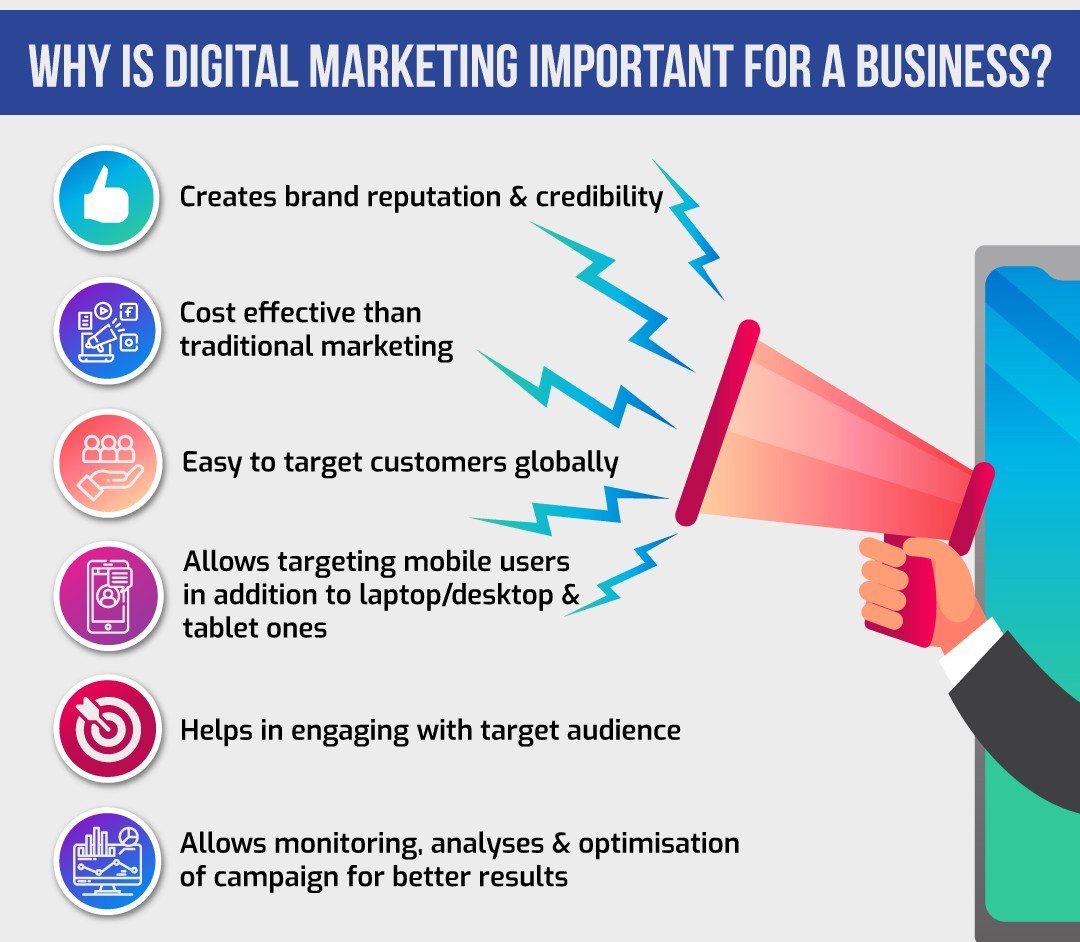
In today’s fast-paced world, where technology and the internet influence almost every aspect of our lives, businesses cannot ignore the power of digital marketing. Traditional marketing methods like print ads, TV commercials, or billboards are no longer enough to reach a global audience effectively. Digital marketing has become the backbone of modern business strategies, allowing companies to reach, engage, and convert customers efficiently.
In this blog, we will explore why digital marketing is crucial for businesses of all sizes and how it shapes the way we interact with customers in 2025.
1. Digital Marketing Reaches a Global Audience
One of the most significant advantages of digital marketing is its ability to reach people anywhere in the world. Unlike traditional marketing, which is often limited to a local audience, digital channels such as social media, search engines, and email marketing can connect businesses with millions of potential customers globally.
- Social Media Platforms: Facebook, Instagram, LinkedIn, TikTok, and YouTube allow brands to engage with diverse audiences across countries.
- Search Engines: Google, Bing, and Yahoo help businesses appear in search results for people actively looking for their products or services.
- Cost-Effective Global Reach: Compared to print media or TV ads, digital marketing campaigns can target users worldwide with a fraction of the cost.
By expanding the audience base, businesses can scale faster and tap into markets that were previously inaccessible.
2. Cost-Effective Marketing Strategy
Digital marketing is significantly more cost-effective than traditional marketing methods. Small businesses or startups, which may have limited budgets, can still compete with larger companies using smart digital strategies.
- Pay-Per-Click (PPC) Advertising: You only pay when someone clicks on your ad, ensuring a better return on investment (ROI).
- Social Media Ads: Platforms like Facebook and Instagram allow precise audience targeting, reducing wasted ad spend.
- Email Marketing: Sending personalized emails is inexpensive but highly effective in nurturing leads and driving sales.
This cost efficiency allows businesses to get maximum results without spending exorbitantly.
3. Precise Targeting and Personalization
Digital marketing provides tools to target specific audiences based on demographics, interests, behaviors, and location. Unlike traditional marketing, which is a one-size-fits-all approach, digital channels enable personalization at scale.
- Targeting Tools: Google Ads, Meta Ads, and LinkedIn Ads allow hyper-specific audience targeting.
- Behavioral Data: Businesses can target users based on their search history, website visits, or app usage.
- Personalized Messaging: Email marketing platforms and chatbots can deliver tailored content to individual users, increasing engagement and conversions.
Personalization not only improves customer experience but also increases the likelihood of conversion.
4. Measurable Results and Analytics
One of the most powerful aspects of digital marketing is the ability to measure every campaign in real time. Businesses no longer rely on guesswork; they can track exactly what works and what doesn’t.
- Key Metrics: Click-through rate (CTR), conversion rate, impressions, bounce rate, cost per click (CPC), and return on ad spend (ROAS).
- Tools: Google Analytics, Google Ads, Meta Ads Manager, and HubSpot provide in-depth insights.
- Data-Driven Decisions: Analytics help businesses adjust strategies, optimize campaigns, and improve ROI.
Measurable results mean businesses can make smarter decisions and allocate budgets effectively.
5. Enhances Brand Awareness
Digital marketing helps build a strong brand presence online. Regular content sharing, social media engagement, and search engine visibility increase awareness and credibility among potential customers.
- Content Marketing: Blogs, videos, infographics, and podcasts help educate and attract the audience.
- Social Media Presence: Active interaction on social platforms builds trust and a loyal following.
- Search Engine Optimization (SEO): High ranking on search engines makes your brand visible to users actively searching for products/services.
A strong digital presence is essential in today’s competitive market to ensure your brand stays top-of-mind.
6. 24/7 Marketing
Unlike traditional marketing, digital marketing never sleeps. Your campaigns run 24/7, allowing you to reach customers at any time of day or night.
- Automation Tools: Email automation, chatbots, and scheduling tools ensure consistent engagement.
- Global Audience: Different time zones no longer restrict marketing efforts.
- Always-On Visibility: Social media posts, paid ads, and SEO content continue to attract and convert leads around the clock.
This constant presence increases the chances of reaching your audience when they are most ready to take action.
7. Better Customer Engagement
Digital marketing enables direct interaction between businesses and customers, improving engagement and relationships.
- Social Media: Comments, likes, shares, and messages allow businesses to communicate instantly.
- Feedback and Reviews: Customers can leave reviews, helping brands improve and build credibility.
- Interactive Content: Polls, quizzes, videos, and webinars create meaningful engagement.
Engaged customers are more likely to become loyal, repeat buyers and brand advocates.
8. Level Playing Field for Small Businesses
Digital marketing gives small businesses an opportunity to compete with larger companies. With the right strategy, even a startup can reach the same audience as a big corporation.
- Affordable Ads: Targeted ads on social media or Google can generate leads without huge budgets.
- Viral Potential: Creative content can go viral, giving small brands massive exposure.
- Niche Targeting: Small businesses can focus on niche markets that bigger companies might overlook.
This democratization of marketing empowers entrepreneurs to grow quickly and efficiently.
9. Supports Other Marketing Channels
Digital marketing complements offline marketing strategies. Online campaigns can drive traffic to physical stores, TV campaigns, or print media.
- Omnichannel Marketing: Integration of online and offline efforts ensures consistent brand messaging.
- Lead Generation: Online campaigns help collect leads that can be nurtured offline.
- Event Promotion: Social media ads can increase attendance for offline events, exhibitions, or workshops.
This synergy increases the overall effectiveness of marketing campaigns.
10. Adapts to Changing Trends
The digital world is constantly evolving, and digital marketing allows businesses to adapt quickly. Unlike traditional marketing, which is rigid and slow, online campaigns can be updated, optimized, or paused instantly.
- Real-Time Adjustments: Monitor performance and tweak campaigns immediately.
- Trend Utilization: Leverage current trends, memes, or viral content to stay relevant.
- Technology Integration: Use AI, automation, and analytics to stay ahead of competitors.
Flexibility ensures businesses remain competitive and relevant in a fast-moving digital landscape.
Conclusion
Digital marketing is no longer optional; it’s essential. It provides businesses with global reach, cost-effective strategies, precise targeting, measurable results, and endless opportunities for engagement and growth. From building brand awareness to converting leads into loyal customers, digital marketing touches every part of a business’s success.
In 2025, businesses that ignore digital marketing risk falling behind competitors who embrace these tools and strategies. Whether you are a startup, a small business, or a global brand, investing in digital marketing is investing in your future growth.